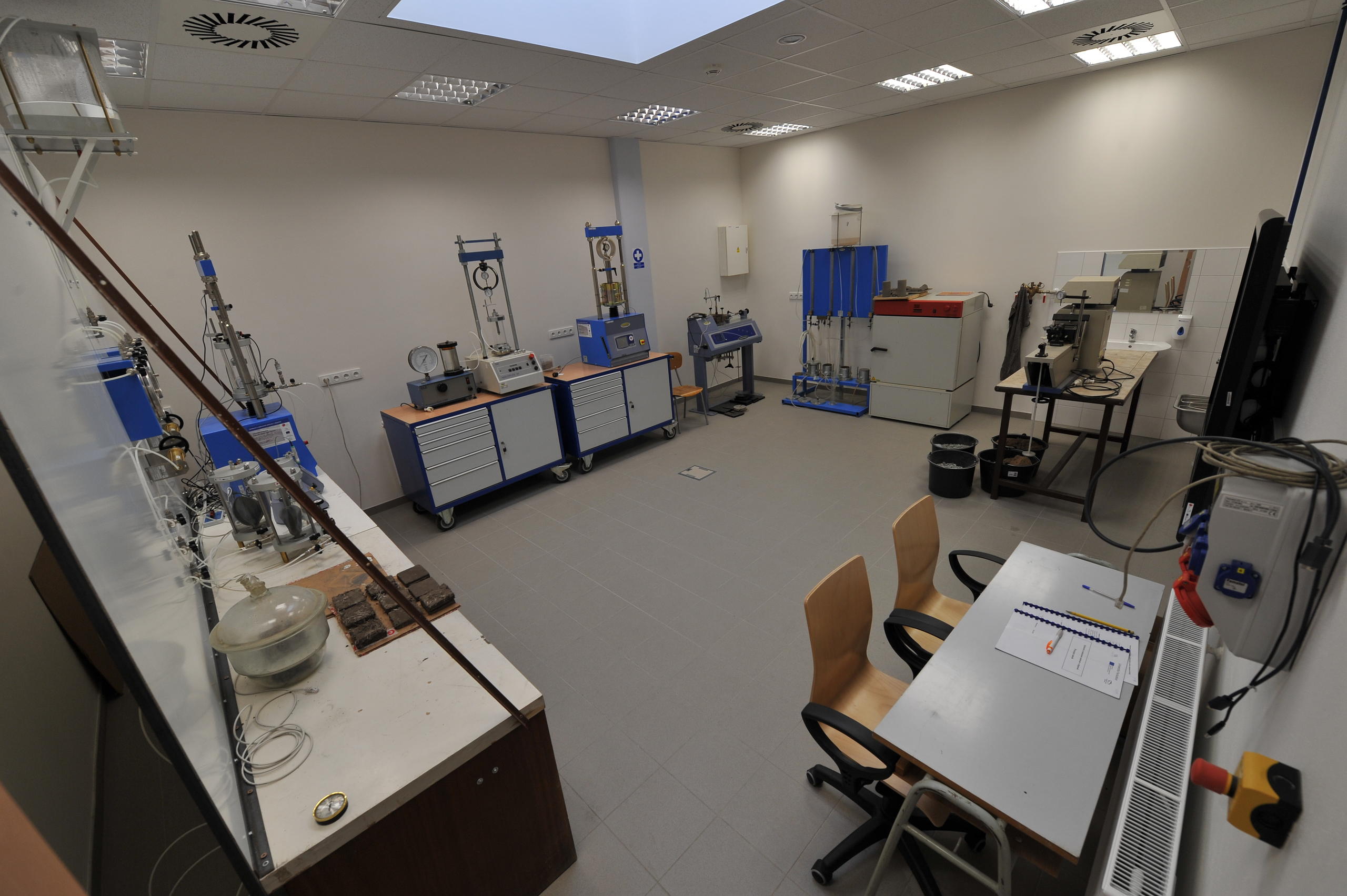
Testing of structural components and materials used in the construction of linear transport structures is conducted within the laboratory facilities of the Department of Transport Structures. We also possess equipment for performing diagnostics and testing directly in the field. Furthermore, the laboratories are used for hands-on teaching during practical sessions of specialized courses, and for conducting tests and measurements as part of final thesis preparation.
- Geotechnical testing field
- Geotechnical modelling frame / Geotechnical test bed
- Proctor compaction test equipment
- Shear box (direct shear) and triaxial test apparatus
- Oedometer / Consolidometer
- Static plate load test (PLT) and light weight deflectometer (LWD) equipment
- California Bearing Ratio (CBR) test equipment
- Multi-channel Ground Penetrating Radar (GPR) (line and 3D systems)
- Falling Weight Deflectometer (FWD) - Category A
- Roughness measurement equipment (profilograph, straightedges)
- Skid resistance and texture depth measurement (Pendulum Test Value - PTV, Mean Texture Depth - MTD)
- Total stations, handheld LiDAR, drone, multistation, and Leica GPS systems
- Leveling instruments and theodolites
- 5000 kN and 3000 kN concrete compression testing machines
- ED 20 tensile testing machine
- Pull-off adhesion test equipment
- Electric furnace (up to 1350 °C)
- Cyclic loading equipment
- Railway track testing facility / Railway test bed
The workplace is equipped with computing technology running specialized engineering software.
We conduct the following laboratory and field testing activities:
- Static and, with limitations, dynamic testing of steel and concrete components of bridge structures or their scaled-down models, focusing particularly on material fatigue.
- Compression testing of concrete (using a 3000 kN testing machine).
- Conventional tensile testing conducted to determine the physical properties of materials (using an ED 20 tensile testing machine).
- Geotechnical testing (moisture content, water absorption, sieve and hydrometer analysis, particle density, shear strength of soils using direct shear and triaxial apparatus (UU – unconsolidated undrained test), oedometer compressibility of soils, unconfined compression test of fine-grained soils, modified Proctor compaction test).
- Pavement diagnostics (measurement of functional parameters, pavement service life).
- Non-destructive diagnostics using Ground Penetrating Radar (GPR).
- Digital mapping (LiDAR, photogrammetry).
- Experimental measurements in the subgrade of linear structures.
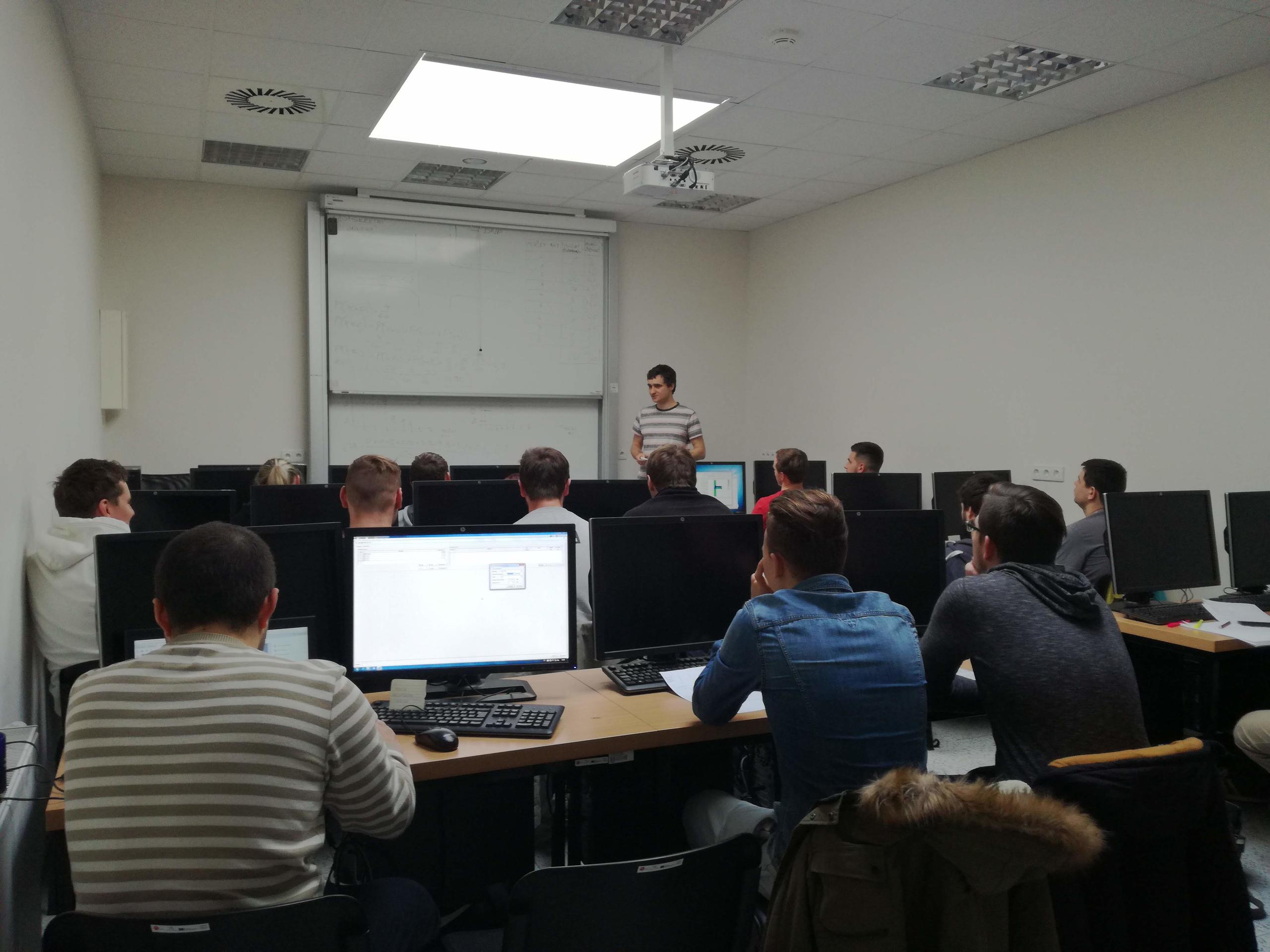
Information Technology Resources
The software and hardware equipment of the classrooms corresponds to standard practices required by current professional standards. For the design and engineering of transport structures, students have access to CAD systems (AutoCAD, AutoCAD Civil 3D, MicroStation V8, Allplan, Allplan Bridge), FEA systems (SCIA Engineer / ESA Pt, Ansys, GeoMKP, ABAQUS), transport microscopic simulation software (PTV Vissim including the Pedestrian module), software for structural and geotechnical calculations (GEO5), and surveying and mapping software (Groma, Atlas, Leica Infinity, Zephyr, RayStudio). Students enjoy free access to these computer labs.
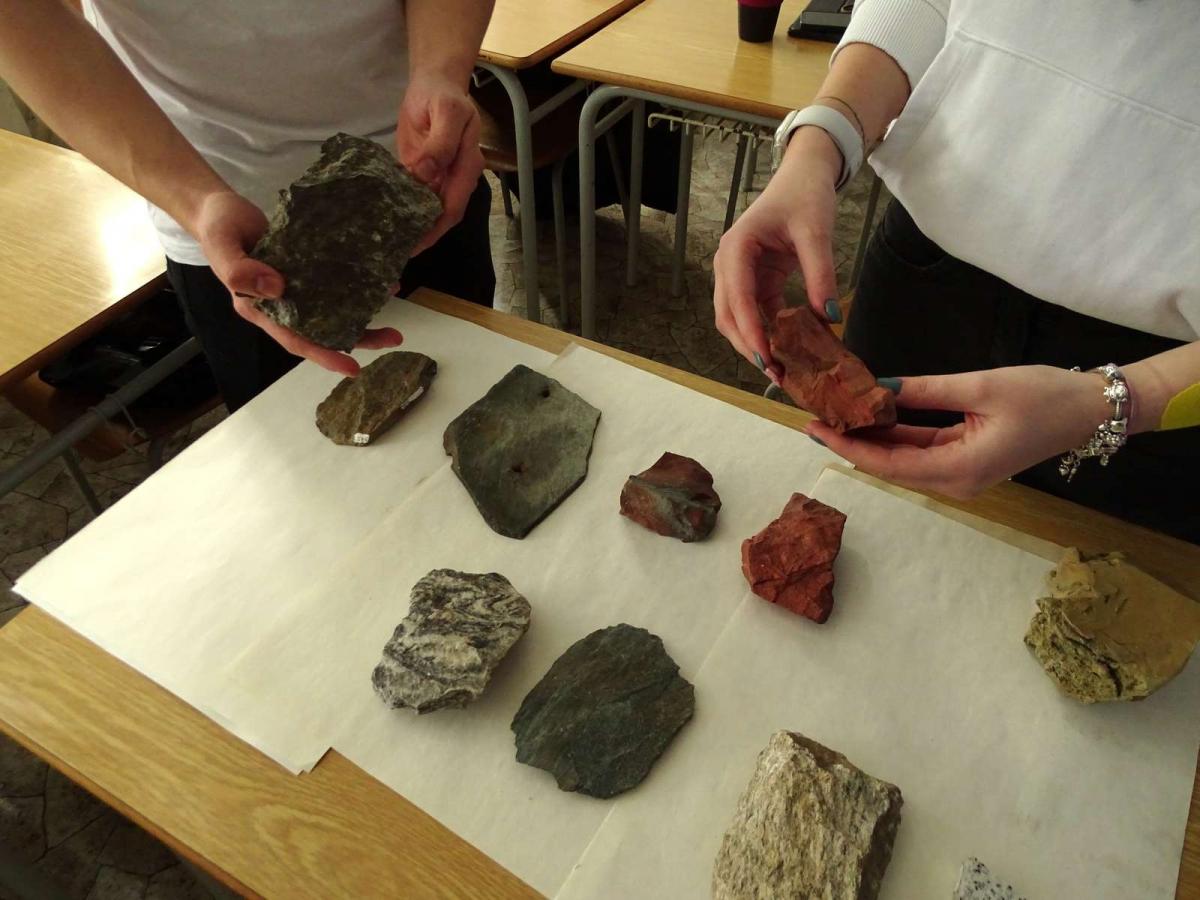
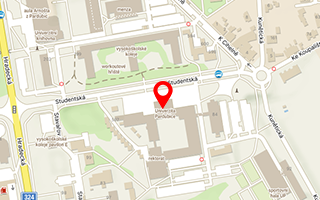
The collection of the Department of Transport Structures at the Jan Perner Transport Faculty of the University of Pardubice is located in the geology cabinet in Building DA. It is a collection of minerals and rocks primarily used for teaching geology at the Department of Transport Structures (KDS). Its historical foundation is based on the rock collection of the Railway Regiment No. 1, which was stationed in Pardubice between 1918 and 1939. Later (already during its placement at KDS), the collection was expanded through purchases tailored to curriculum needs, as well as occasional donations from lecturers and students. Between 2021 and 2023, the collection was significantly expanded to include all types of rocks and soils significant for transport engineering. Students have access not only to collection exhibits but also to hands-on samples intended for practical identification procedures.